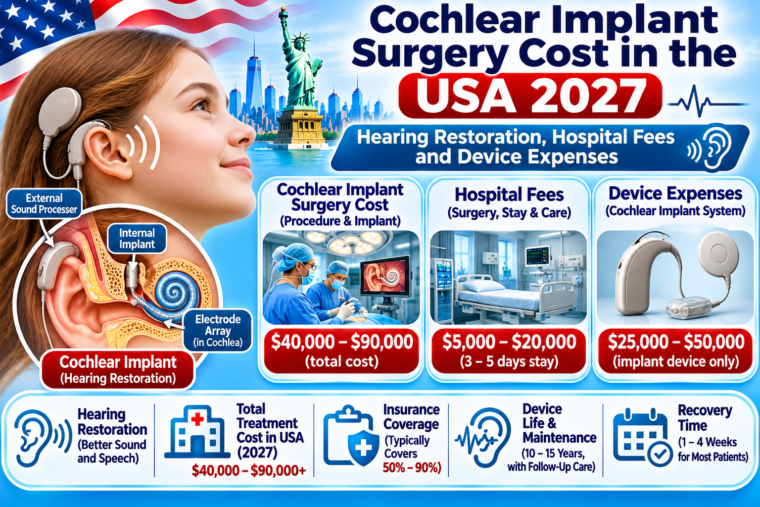
Cochlear implant surgery is an important treatment option for children and adults with significant hearing loss who receive limited benefit from appropriately fitted hearing aids. Unlike conventional hearing aids, which amplify sound, cochlear implants use electronic technology to stimulate the hearing nerve. Understanding cochlear implant surgery costs in the USA in 2027 can help patients and families prepare for medical expenses, insurance decisions, and long-term hearing rehabilitation.
The total treatment cost depends on the implant device, surgical facility, specialist fees, anesthesia, diagnostic testing, insurance coverage, and postoperative programming. Some patients receive one implant, while others may be candidates for bilateral implantation involving both ears.
Cochlear implantation does not restore normal natural hearing. Instead, it provides access to sound signals that the brain learns to interpret through rehabilitation and experience. Outcomes vary according to hearing history, age, nerve function, and other medical factors.
This comprehensive guide examines estimated cochlear implant surgery expenses in the United States for 2027, including device prices, hospital charges, audiologist fees, rehabilitation, and insurance benefits.
Understanding Cochlear Implant Surgery
A cochlear implant is an electronic medical device designed to bypass damaged sensory structures within the inner ear and directly stimulate the auditory nerve.
The system generally contains an external sound processor and an internal surgically implanted component. The external processor captures sound and converts it into signals that are transmitted to the implanted device.
Audiologists and ear specialists evaluate whether cochlear implantation is appropriate. Assessment commonly includes hearing tests, speech recognition measurements, medical examinations, and imaging when indicated.
Typical treatment stages include:
- Initial hearing and speech recognition evaluation.
- Consultation with an implant surgeon.
- CT or MRI imaging when required.
- Surgical placement of the internal implant.
- Initial device activation and programming.
- Follow-up audiology appointments.
- Hearing rehabilitation and communication training.
The complete process extends beyond surgery because patients generally need multiple programming appointments to optimize device performance.
Cochlear Implant Surgery Cost in the USA in 2027
Cochlear implant treatment is a specialized medical service that can involve substantial expenses. The overall price may include device hardware, hospital resources, surgeon services, anesthesia, and hearing rehabilitation.
For general financial planning, a single-ear cochlear implantation episode in the United States may involve total medical spending of approximately $30,000 to $100,000 or more. This is a broad illustrative range rather than a verified national 2027 average.
Estimated USA Cost Breakdown
| Treatment Component | Illustrative Cost (USD) |
|---|---|
| Audiology Evaluation | $200–$1,000+ |
| ENT Specialist Consultation | $150–$500 |
| CT or MRI Imaging | $500–$3,500+ |
| Cochlear Implant Device Components | $15,000–$35,000+ |
| Surgeon and Anesthesia Services | $3,000–$12,000+ |
| Hospital and Operating Room Services | $10,000–$35,000+ |
| Activation and Programming | $300–$1,500+ per visit or package |
| Hearing Rehabilitation | $100–$300+ per session |
Important: These amounts are hypothetical 2027 budgeting estimates, not confirmed provider quotations. Complete surgical packages may already include the implant device, surgeon, anesthesia, and hospital services. Individual amounts should not be added without checking for overlapping charges.
USA Cochlear Implant Cost Comparison
Because this guide focuses on the United States, comparing treatment arrangements within the American healthcare system helps explain financial differences.
| USA Treatment Scenario | Illustrative Total Budget |
|---|---|
| Single-Ear Implantation | $30,000–$100,000+ |
| Bilateral Implantation | $60,000–$180,000+ |
| Initial Activation and Follow-Up | $1,000–$5,000+ when billed separately |
| Ongoing Device and Rehabilitation Care | Varies by individual needs |
These scenarios are illustrative and should not be interpreted as typical patient out-of-pocket payments. Bilateral implantation does not necessarily cost exactly twice as much as single-ear surgery.
Cochlear Implant Device Expenses
The implant device is a major component of overall treatment costs. Its internal receiver and electrode array are placed surgically, while an external sound processor is worn outside the body.
Device pricing depends on the manufacturer, technology, purchasing contracts, and components included in the treatment package.
Patients should ask whether their quotation includes the external processor, accessories, warranty, initial programming, and future service arrangements.
Replacement processors, batteries, microphones, and other accessories may create additional long-term expenses. Insurance coverage for replacements can differ from coverage for initial implantation.
Hospital Fees and Surgical Expenses
Cochlear implant surgery is generally performed under general anesthesia. Many patients can return home the same day, although individual medical circumstances may require additional observation.
Hospital charges can include operating room use, nursing services, medications, sterile supplies, recovery monitoring, and implant-related materials.
Facilities with different insurance contracts may charge substantially different amounts for similar procedures.
Patients should obtain an itemized estimate identifying device costs, facility charges, surgeon fees, and anesthesia services before scheduled treatment.
ENT Surgeon and Audiologist Fees
An otolaryngologist, often called an ENT specialist, evaluates ear anatomy, medical suitability, and surgical risks. An audiologist performs hearing assessments and manages device programming.
These professionals have different responsibilities, and their services may be billed separately.
Complex medical histories, additional imaging, and specialized consultations may increase evaluation expenses. However, thorough assessment is essential for selecting appropriate candidates and setting realistic expectations.
Cochlear Implant Insurance Coverage in the USA
Many American health insurance plans cover cochlear implantation when the patient meets medical necessity requirements. Coverage may include evaluation, surgery, implant equipment, activation, and selected rehabilitation services. However, patients should not assume every component is automatically included.
Important insurance considerations include:
- Annual deductibles and coinsurance.
- Prior authorization for implantation.
- Approved surgeons and hospital networks.
- Coverage for one or both ears.
- External processor replacement benefits.
- Follow-up programming and rehabilitation.
- Annual out-of-pocket maximums.
Patients should request written confirmation of coverage before scheduled surgery. The hospital billing department can help identify procedure codes and estimate patient responsibility.
Medicare Coverage for Cochlear Implants
Medicare covers cochlear implantation for eligible beneficiaries who meet its national coverage criteria. These include specified levels of bilateral sensorineural hearing loss, limited benefit from hearing aids, and other clinical requirements.
Medicare expanded its national coverage criteria in 2022, allowing more qualifying adults to receive implantation. Nevertheless, coverage still requires appropriate evaluation and documentation.
Original Medicare Part B generally applies to qualifying outpatient implantation services. Applicable deductibles and coinsurance may remain the patient’s responsibility.
Medicare Advantage plans may have different provider networks and authorization procedures. Patients should confirm coverage for audiology services, surgery, and postoperative rehabilitation.
Medicaid and Children’s Cochlear Implant Coverage
Medicaid may cover cochlear implantation for eligible children and adults, although benefits and administrative requirements vary by state.
Children may need ongoing audiology appointments, speech-language therapy, educational support, and device maintenance after implantation.
Families should verify coverage for external processors, accessories, replacement equipment, and rehabilitation services. Early intervention and consistent communication support are important components of pediatric care.
Cochlear Implant Surgery Without Insurance
Uninsured patients may face significant direct expenses for evaluation, implant hardware, surgery, and rehabilitation. Published self-pay estimates can differ substantially between medical centers.
Some hospitals offer financial assistance, payment arrangements, or discounted self-pay packages for qualifying individuals. Patients should request detailed written estimates rather than relying on a single advertised price.
Comparing qualified implant centers may reveal pricing differences, but clinical expertise, device support, and long-term follow-up availability should remain essential considerations.
Factors Influencing Cochlear Implant Surgery Prices
1. Implant Device and Manufacturer
Device models, included accessories, manufacturer contracts, and warranty arrangements can affect overall treatment costs. Published research has documented substantial variation in negotiated implant device prices between American hospitals.
2. Single or Bilateral Implantation
Implanting both ears generally requires additional devices and surgical resources. Costs depend on whether procedures occur together or at separate times.
3. Hospital and Surgery Center Location
Facility pricing varies across US regions because of staffing expenses, hospital overhead, equipment, and insurance contracts. Hospital outpatient departments and ambulatory surgery centers may receive different reimbursements.
4. Insurance Benefits
Deductibles, coinsurance, network participation, authorization requirements, and device coverage can substantially influence the patient’s final payment.
5. Specialist and Rehabilitation Services
Additional audiology testing, programming sessions, speech-language therapy, and specialized consultations may increase treatment expenses.
6. Medical Complexity
Patients with unusual ear anatomy, previous surgery, infections, or additional health conditions may require more complex evaluation and surgical planning.
Recovery After Cochlear Implant Surgery
Recovery varies according to age, general health, and surgical circumstances. Patients may experience temporary dizziness, discomfort, or swelling around the incision. Their surgical team provides instructions about wound care and activity restrictions.
The external processor is generally activated after an initial healing period rather than immediately during surgery.
Patients should understand that successful implantation requires more than physical healing. The brain needs time and practice to interpret electrical sound signals.
Activation and Programming Expenses
Initial activation involves connecting the external processor and adjusting electrical stimulation levels. Audiologists then refine programming settings during follow-up appointments.
Multiple visits may be necessary during the first year, especially for children or patients learning to interpret new sound information.
Some implant centers include initial programming within a treatment package, while others bill separately. Patients should clarify the number of included appointments and future service charges.
Long-Term Cochlear Implant Maintenance Costs
Cochlear implants require ongoing maintenance. External processors and accessories may eventually need repair or replacement, while internal implants are designed for long-term use but can occasionally require revision surgery.
Potential continuing expenses include:
- Replacement batteries or charging accessories.
- External processor repairs.
- Periodic programming appointments.
- Audiology examinations.
- Speech and hearing rehabilitation.
- Replacement equipment when medically necessary.
Patients should review manufacturer warranties and insurance replacement policies to understand future financial responsibilities.
How to Reduce Cochlear Implant Treatment Costs
Careful planning can help patients manage expenses without compromising appropriate hearing care.
- Verify insurance eligibility before surgery.
- Request complete written treatment estimates.
- Confirm hospital and specialist network participation.
- Ask which device accessories are included.
- Review programming and rehabilitation coverage.
- Explore hospital financial assistance programs.
- Compare qualified implant centers.
- Maintain recommended device care and follow-up.
Patients should prioritize clinical suitability, surgical expertise, reliable programming support, and long-term device services rather than choosing solely on price.
Frequently Asked Questions
How much does cochlear implant surgery cost in the USA in 2027?
For broad budgeting, a single-ear implantation episode may involve approximately $30,000 to $100,000 or more in medical spending. Actual costs depend on device selection, facility charges, insurance contracts, and included services.
Does insurance cover cochlear implants?
Many insurance plans cover medically necessary cochlear implantation. Patients must verify eligibility, authorization requirements, and individual cost-sharing.
Can cochlear implants restore normal hearing?
No. Cochlear implants provide electrical hearing signals that can improve access to sound and speech, but they do not recreate normal biological hearing.
Are cochlear implants permanent?
The internal device is intended for long-term implantation. External components may require maintenance or replacement, and occasional revision surgery can become necessary.
Does Medicare pay for cochlear implant surgery?
Medicare covers implantation for qualifying beneficiaries under established national criteria. Applicable deductibles and coinsurance may apply.
Conclusion
Cochlear implant surgery costs in the USA in 2027 depend on device expenses, hospital fees, surgeon services, audiology appointments, insurance coverage, and rehabilitation needs.
Although implantation can involve substantial medical spending, insurance benefits and financial assistance may significantly reduce direct patient expenses.
Patients should compare comprehensive estimates, understand long-term maintenance requirements, and discuss realistic hearing outcomes with qualified implant specialists.
Medical Disclaimer: This article provides general educational and financial planning information only. It does not replace professional medical advice, diagnosis, or treatment. All 2027 cost figures are illustrative estimates and should be verified with healthcare providers and insurance companies.
